


The history of the Nafplion printing house is closely connected with the seat of the Revolutionary Greek Government. The printing house of the Administration was established in Nafplion to produce the government gazette. Three different presses were in operation: a) one with French printing types that predated Mavrokordatos in Nafplion, b) one of the two lithographic presses that Stanhope had brought with him, and c) a new press, ordered from England for the express purpose of publishing the gazette. Pavlos Patrikios was appointed director of the printing house (February 1825), with Konstantinos Tombras as typesetter of the gazette. Theokletos Pharmakidis was appointed editor of the gazette in September 1825, and the first issue of the General Gazette of Greece (Γενική Εφημερίς της Ελλάδος) appeared on 7 October 1825. A few months later, however, trouble began to brew at the printing house due to conflicts between Pharmakidis and the legislative branch of the government (Bouleutiko) on the one hand, and protests and strikes by the printing house employees, on the other (7 March 1826). Konstantinos Tombras was denounced as the instigator of the strike and was imprisoned, while most of the strikers were fired. Following the resignation of Pharmakidis in June 1827, Giorgos Chrysidis was appointed director. Printing duties were assigned, in succession, to Pavlos Patrikios and George Mestheneas. The printing house followed the Administration whenever it was forced to change seats, first from Nafplion to Aigina, and then to Poros, back to Nafplion, and again to Aigina. It published a total of eighteen books and pamphlets, and 125 broadsides.
![Γενικὴ ἐφημερὶς τῆς Ἑλλάδος. [General Gazette of Greece]. Nafplion, Aigina, Poros: Printing House of the Administration, 1825 – 1832. The General Gazette of Greece was the first official governmental publication in Greece, and ran from 7 October, 1825 to 23 March, 1832. It was the predecessor of the Government Gazette, and fulfilled a number of administrative purposes over its seven years of publication. It was published in Nafplio, Aigina, and Poros in turn, by Theoklitos Pharmakidis (1825-1827), Georgios Chrysidis (1827-1831), and Ioannis Galiatsas (1831-1832). As the official government mouthpiece, it contained official documents, decisions, and proclamations, in addition to the Minutes of Legislative Assembly meetings.](https://greekrevolutionprinting.gr/wp-content/uploads/2022/02/PHOTOS-NAFPLIO1.jpg)
![Πολιτικὸν Σύνταγμα τῆς Ἑλλάδος [Political Constitution of Greece, Drafted, discussed, and ratified by the Third National Assembly]. Troizin, May 1827. From the Printing House of the Administration [most probably printed in Nafplio]. The first constitution to bear the title “political constitution” rather than “regime.” This was the second revision of the Greek Constitution, ratified in Troizin in May 1827, by the Third National Assembly. The Political Constitution of Greece was considered liberal and democratic for its time, establishing the principles of popular sovereignty and freedom of religion. It was re-issued in Hermoupolis in 1831 by Nicolaos Varotsis.](https://greekrevolutionprinting.gr/wp-content/uploads/2022/02/PHOTOS-NAFPLIO2.jpg)
![Ἀποσπάσματα ἐκ τῶν τοῦ κυρίου Βαττέλου Περὶ Δικαίου Τῶν Ἐθνῶν [Selections from Vattel’s The Law of Nations], translated into vernacular Greek,” By S. S. Nafplion. Printing House of the Administration. 1825. First Greek edition of the treatise on international law of the Swiss international lawyer Emer (Emmerich) de Vattel (1714-1767), Droit des Gens ou Principes de la loi Naturelle Appliques à la Conduite et aux Affaires des Nations et des Souverains (Principles of the Law of Nature Applied to the Conduct and Affairs of Nations and Sovereigns) (London, 1758). Translated in part by Spyridon Skoufos, under the pen-name Patriotis.](https://greekrevolutionprinting.gr/wp-content/uploads/2022/02/PHOTOS-NAFPLIO3.jpg)
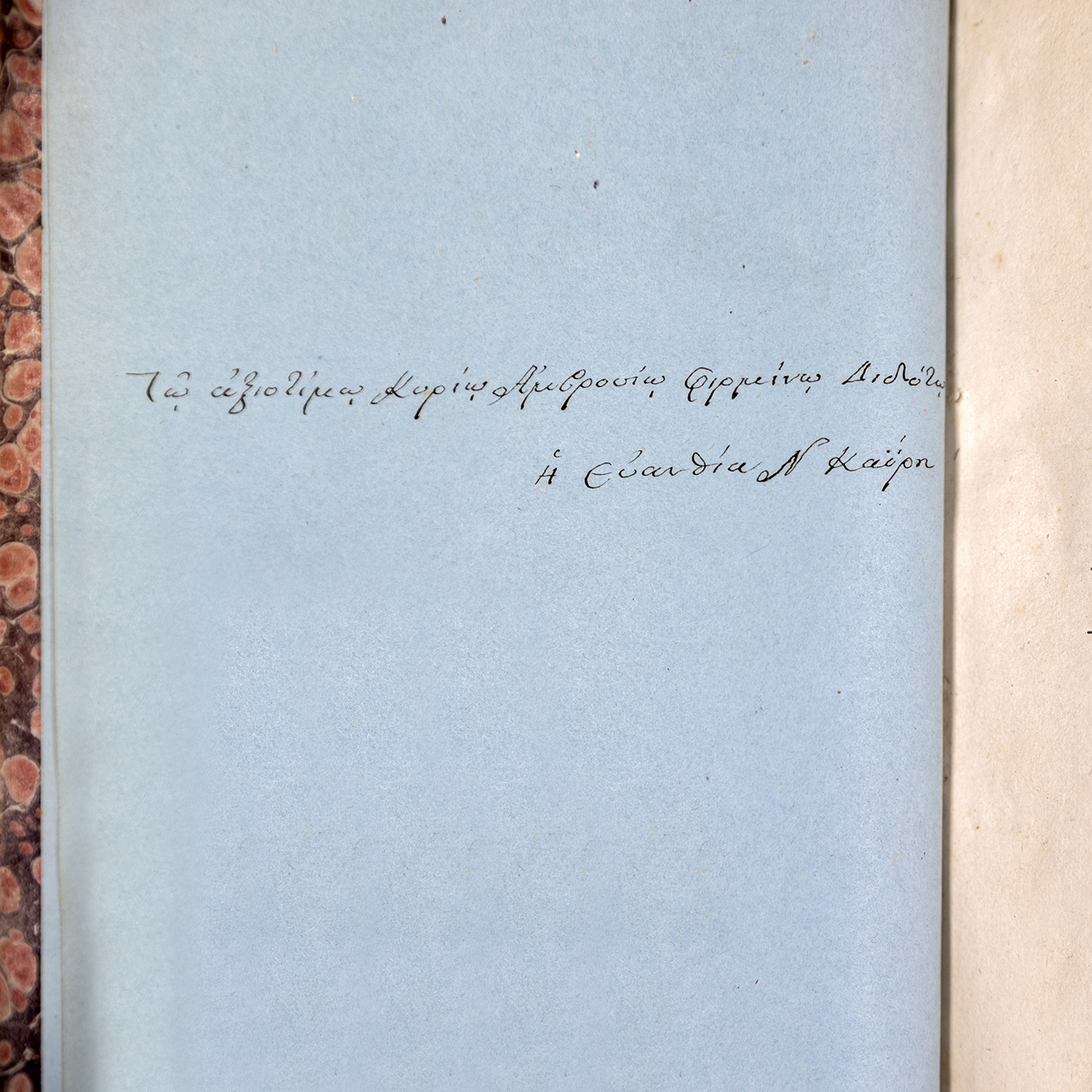
![Νικήρατος [Nikeratos, Drama in three acts], by a certain Greek woman. Nafplion: Printing House of the Administration, 1826.] First edition of the anonymously published prose drama Nikeratos. The plot takes place during the siege of Missolonghi, culminating in the heroic Exodus. Nikeratos, written only three months after the Exodus, was the first theatrical play to be based on a historical event of the Revolution. It was written by the intellectual Evanthia Kairi (1799 – 1866), and was published eponymously by Alexandros Soutzos in The Friend of the Law (issue 266, 7 February 1827). Nikeratos was first staged in 1827 (or 1830), and later in Hermoupolis in 1838.](https://greekrevolutionprinting.gr/wp-content/uploads/2022/02/PHOTOS-NAFPLIO4.jpg)
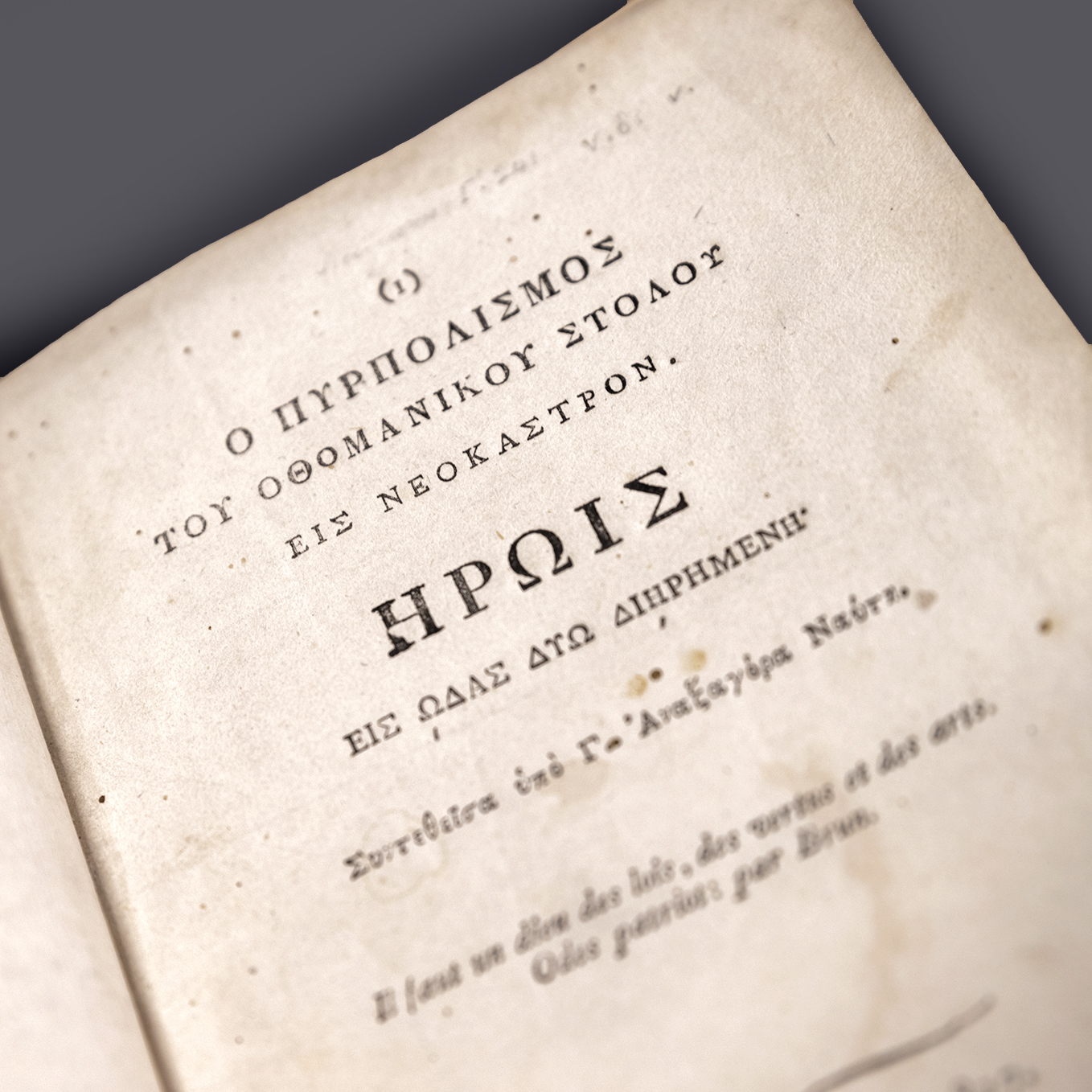
![Ὁ πυρπολισμὸς τοῦ ὈθΟμανικοῦ Στόλου εἰς Νεόκαστρον. [The Burning of the Ottoman Fleet at Neokastron. Heroic Epic in Two Odes]. Composed by G. Anaxagoras Nautis. 1st December 1827.] Two odes on the naval battle of Navarino (20 October, 1827) that saw the complete destruction of the Ottoman fleet at the hands of the allied forces of Russia, France, and England. Niokastro or Neokastro, is an Ottoman fortress that guards the bay of Navarino. Although no place of publication is mentioned, it was most likely printed in Nafplion, at the Printing House of the Administration. But Joannes Gennadius notes in his catalog: “From the Hydra Printing House.” On the title page: “Il faut un dieu des lois, des vertues et des arts. Odes patriot: par Brun.”](https://greekrevolutionprinting.gr/wp-content/uploads/2022/02/PHOTOS-NAFPLIO5.jpg)
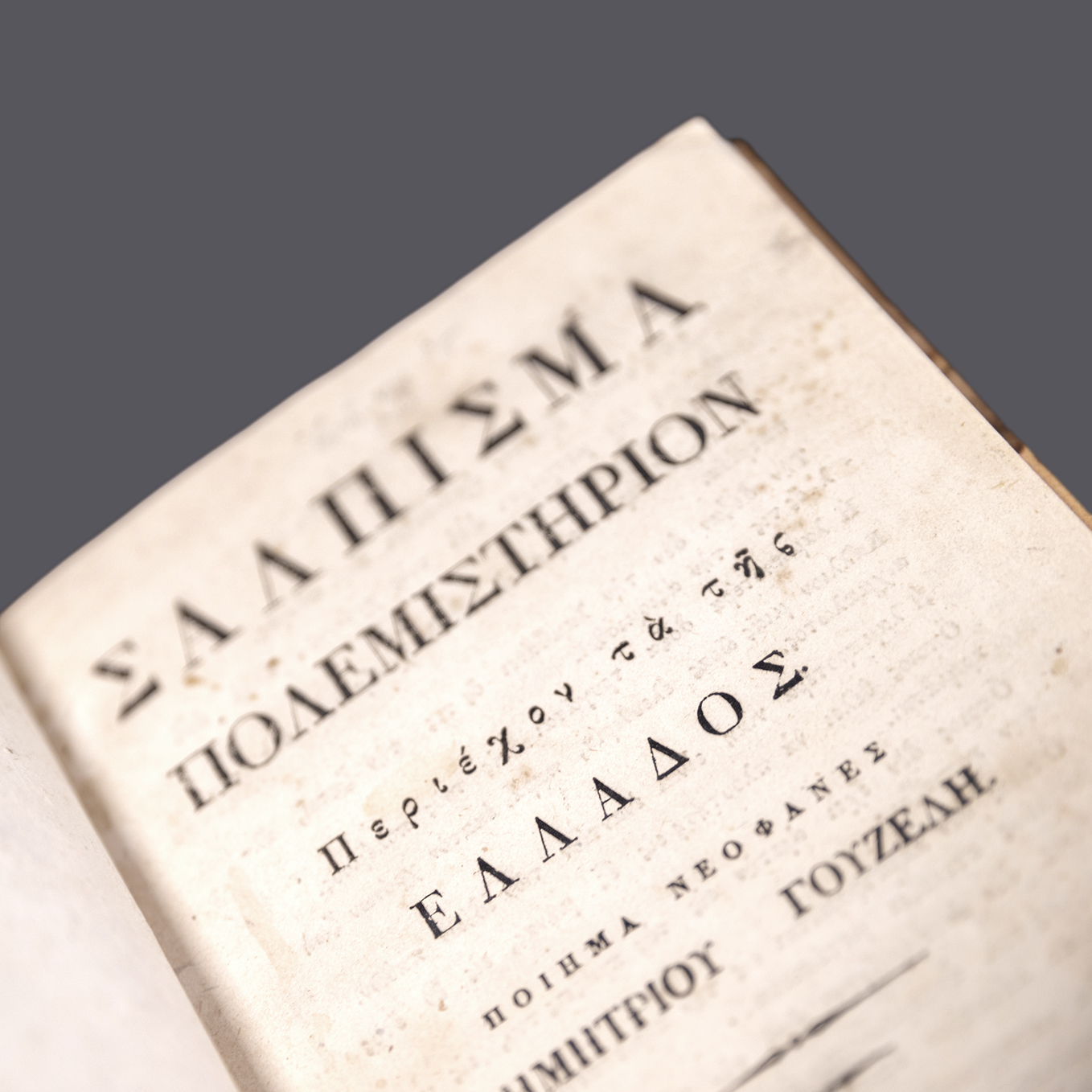
![Σάλπισμα Πολεμιστήριον. [Trumpet call to War concerning the events of Greece], new poem by Demetrios Gouzelis. Nafplion: Printing House of the Administration, 1827. Poem inspired by the events of the Revolution, composed by the poet and playwright Demetrios Gouzelis (1774-1843), in September 1826, in Nafplion (τον Τρυγητήν 1826 εν Ναυπλίω).](https://greekrevolutionprinting.gr/wp-content/uploads/2022/02/PHOTOS-NAFPLIO6.jpg)
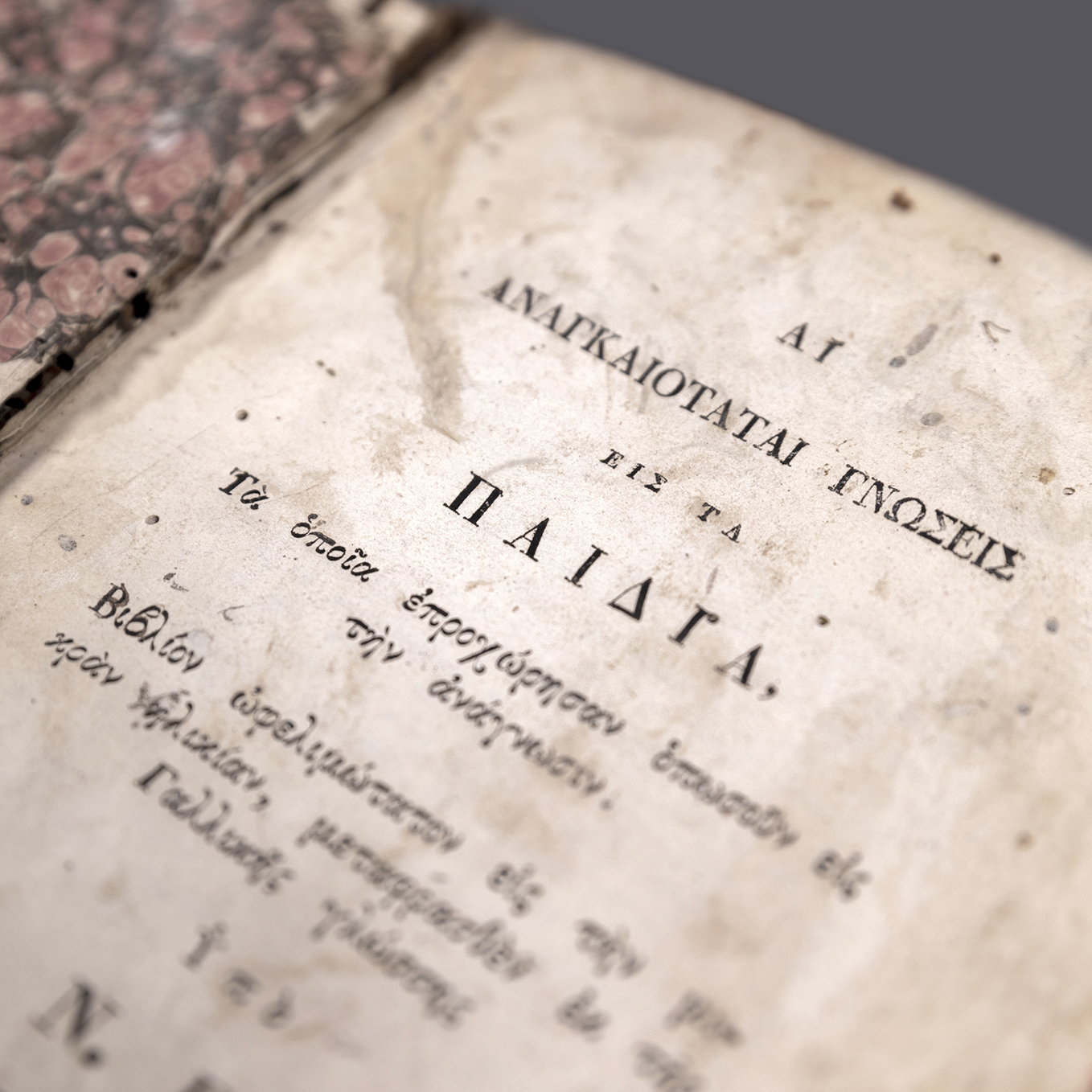
![Αἱ Ἀναγκαιόταται Γνώσεις εἰς τὰ παιδία. [Necessary knowledge for children who have begun learning to read. An especially useful book for young ages], translated from the French by N. E. and printed by Pavlos Patrikios at his expense, 25 May 1826. Schoolbook. First Greek edition, translated from French. The translation is attributed to Nicolaos G. Phardoulis, from Smyrna, who was active as an author from 1835 to 1855. He taught at the Syros Gymnasium and translated a number of books from French.](https://greekrevolutionprinting.gr/wp-content/uploads/2022/02/PHOTOS-NAFPLIO7.jpg)
![Διονυσιὰς Γραμματικὴ. [Dionysias Grammar of the Eight Parts of Speech], written in question-and-answer form by the Archimandrite and Doctor of Medicine, Dionysios Pyrrhos the Thessalian. First published for the benefit of all studious Greeks. With the collaboration of the Illustrious Bayzade Georgios Mavromichalis, the worthy Spartan. Nafplion, 18 April 1827. First and possibly only edition of the Grammar of the Eight Parts of Speech of Dionysios Pyrrhos, whose seal is printed on the title page. The Spartan “Bayzade” Georgios Mavromichalis (1800 – 1831) was the third son of Petros (Petrobey) Mavromichalis and a member of the Phiiliki Etairia. He fought in the Revolution and participated in the murder of Ioannis Kapodistrias.](https://greekrevolutionprinting.gr/wp-content/uploads/2022/02/PHOTOS-NAFPLIO8.jpg)
